




The Critical Role of Automotive Connectors
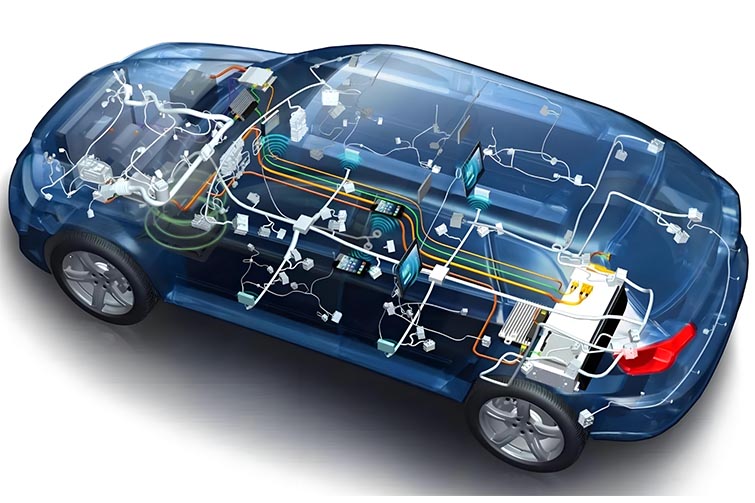
In the age of electric vehicles and autonomous driving, a car contains more computing power than the first space shuttles. Yet beneath the sleek exteriors and advanced software lies a network of unsung heroes: automotive connectors. These small but essential components are responsible for virtually every electrical function in a vehicle. Without them, a modern car would be nothing more than a silent, immobile shell.
Automotive connectors serve as the vital junctions that link sensors, actuators, control units, and power sources. Their role extends far beyond simply joining wires; they ensure safety, reliability, and performance under extreme conditions. Understanding what these connectors do is key to appreciating the complexity of today’s automotive engineering.
1. The Fundamental Role: Electrical Interconnection
At its core, a connector creates a reliable, separable electrical path. This might sound simple, but in an automotive context it becomes a formidable engineering challenge. A typical modern vehicle contains over 1,500 connection points and several kilometers of wiring. Each connector must consistently transmit power or signals without interruption, despite constant vibration, temperature swings, and exposure to contaminants.
Automotive connectors manage two primary types of electrical duties: power delivery and signal transmission.
- Power Delivery: From the battery to the starter motor, from the alternator to the fuse box, and in electric vehicles from the high‑voltage battery to the traction motor, connectors must carry substantial currents—sometimes hundreds of amperes. High‑current connectors are designed with robust terminals, wide contact surfaces, and materials that minimize resistive heating. A poorly designed power connector can cause voltage drops, overheating, and even fire.
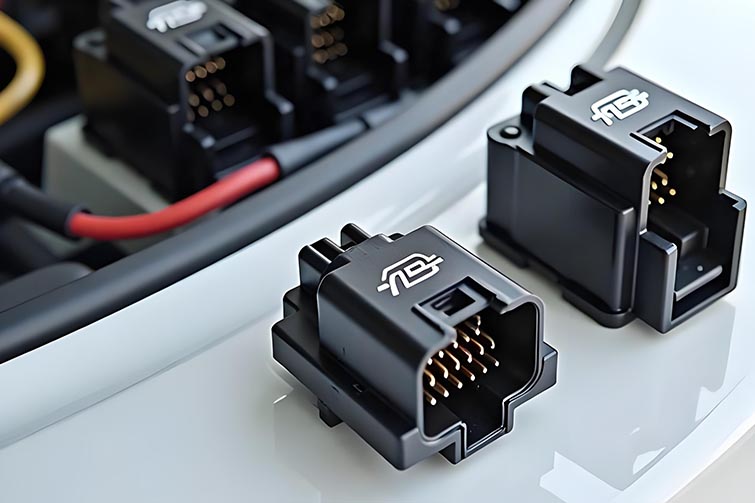
- Signal Transmission: Sensors for ABS, airbags, engine management, cameras, radar, and LiDAR all rely on connectors to carry low‑voltage, low‑current signals with high integrity. In these applications, even a momentary loss of contact or a few milliohms of additional resistance can corrupt data or trigger fault codes. Signal connectors often use gold‑plated terminals to ensure stable, corrosion‑free connections over the vehicle’s lifetime.
2. Ensuring Reliability in Harsh Environments
Unlike consumer electronics that live in controlled indoor settings, automotive connectors are exposed to some of the most punishing environments imaginable. Their role is to maintain uncompromised performance in conditions that would quickly destroy standard industrial connectors.
Temperature Extremes: A connector in an engine compartment may face temperatures from -40°C to 150°C. Under‑hood connectors are made from high‑temperature thermoplastics and elastomeric seals that retain flexibility and insulation properties across this range. Thermal cycling—repeated expansion and contraction—can gradually loosen terminals if the connector is not designed with proper retention features.
Vibration and Mechanical Shock: Roads are rarely perfectly smooth. Connectors mounted on engines, transmissions, or chassis must withstand continuous vibration. To counteract this, automotive connectors incorporate terminal position assurances (TPA) and connector position assurances (CPA). These secondary locking devices prevent terminals from backing out of the housing and keep connector halves securely mated, even after years of rough driving.
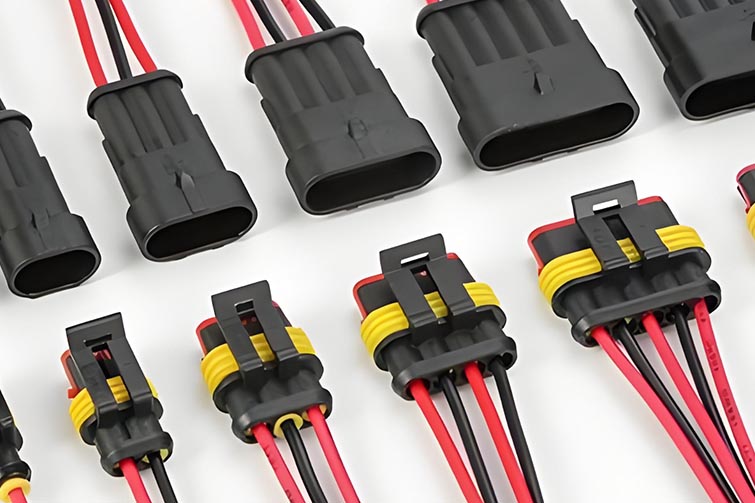
Moisture and Contamination: Water, road salt, oil, and dust are constant threats. Sealed connectors with IP (Ingress Protection) ratings—typically IP67, IP68, or IP6K9K—prevent moisture ingress that could cause corrosion or short circuits. In critical areas like engine control units (ECUs) or battery packs, sealing is mandatory to ensure long‑term reliability.
3. Enabling Modularity and Serviceability
One of the most overlooked roles of connectors is their ability to make manufacturing and maintenance practical. Without connectors, every electrical component would have to be hardwired into the wiring harness, creating an inflexible and nearly unserviceable vehicle.
Manufacturing Efficiency: On the assembly line, modules like doors, seats, or complete instrument panels are built separately with their own wiring sub‑harnesses. Connectors allow these modules to be pre‑assembled and tested before final installation. A technician simply plugs the module’s connector into the main harness—a process that takes seconds instead of hours.
Ease of Repair: When a sensor or control unit fails, a connector allows a technician to replace just the faulty component without cutting or splicing wires. This reduces repair time, cost, and the risk of introducing new failure points. Serviceability is a core requirement for automotive design, and connectors make it possible.
4. Supporting High‑Speed Data and Electrification
The roles of automotive connectors have expanded dramatically with two major industry trends: vehicle electrification and the proliferation of data‑intensive systems.
High‑Voltage Systems: In hybrid and electric vehicles, connectors are now tasked with managing high voltage—typically 400V to 800V or more. These high‑voltage connectors must incorporate safety features such as touch‑proof designs, interlock circuits that de‑energize the system before disconnection, and electromagnetic shielding to contain interference. Their role is not only power transmission but also ensuring the safety of technicians and first responders.
Data Communication: Modern vehicles use multiple high‑speed protocols: Automotive Ethernet (up to 10 Gbps), USB, LVDS for cameras, and CAN FD for control networks. Connectors for these applications must maintain controlled impedance and provide shielding against electromagnetic interference (EMI). A poorly shielded data connector can introduce noise that disrupts ADAS functions or degrades infotainment quality. In this context, the connector’s role extends to preserving signal integrity in a noisy electrical environment.
5. Safety and Compliance
Automotive connectors are safety components. A failure in a connector can disable headlights, cause engine stalls, or prevent airbag deployment. For this reason, they must meet stringent industry standards such as USCAR (United States Council for Automotive Research) and LV 214 (German automotive standard). These standards define tests for vibration, temperature cycling, contact resistance, and durability to ensure that connectors perform reliably over the vehicle’s intended lifespan—typically 10 to 15 years or more.
Connectors also play a role in functional safety (ISO 26262). In safety‑critical systems like braking or steering, connectors are often designed with redundant contacts or dual locking mechanisms to mitigate the risk of a single point of failure.
Conclusion
Automotive connectors are far more than simple wire junctions. They are precision electromechanical devices that ensure power flows, signals remain intact, and systems stay connected despite extreme heat, cold, vibration, and contamination. They enable efficient manufacturing, serviceable designs, and the advanced technologies that define modern vehicles—from electric powertrains to autonomous driving.
As vehicles continue to evolve toward greater electrification, higher data rates, and increased automation, the role of connectors will only grow in importance. They are the silent enablers of automotive innovation, proving that sometimes the smallest components carry the biggest responsibilities.